



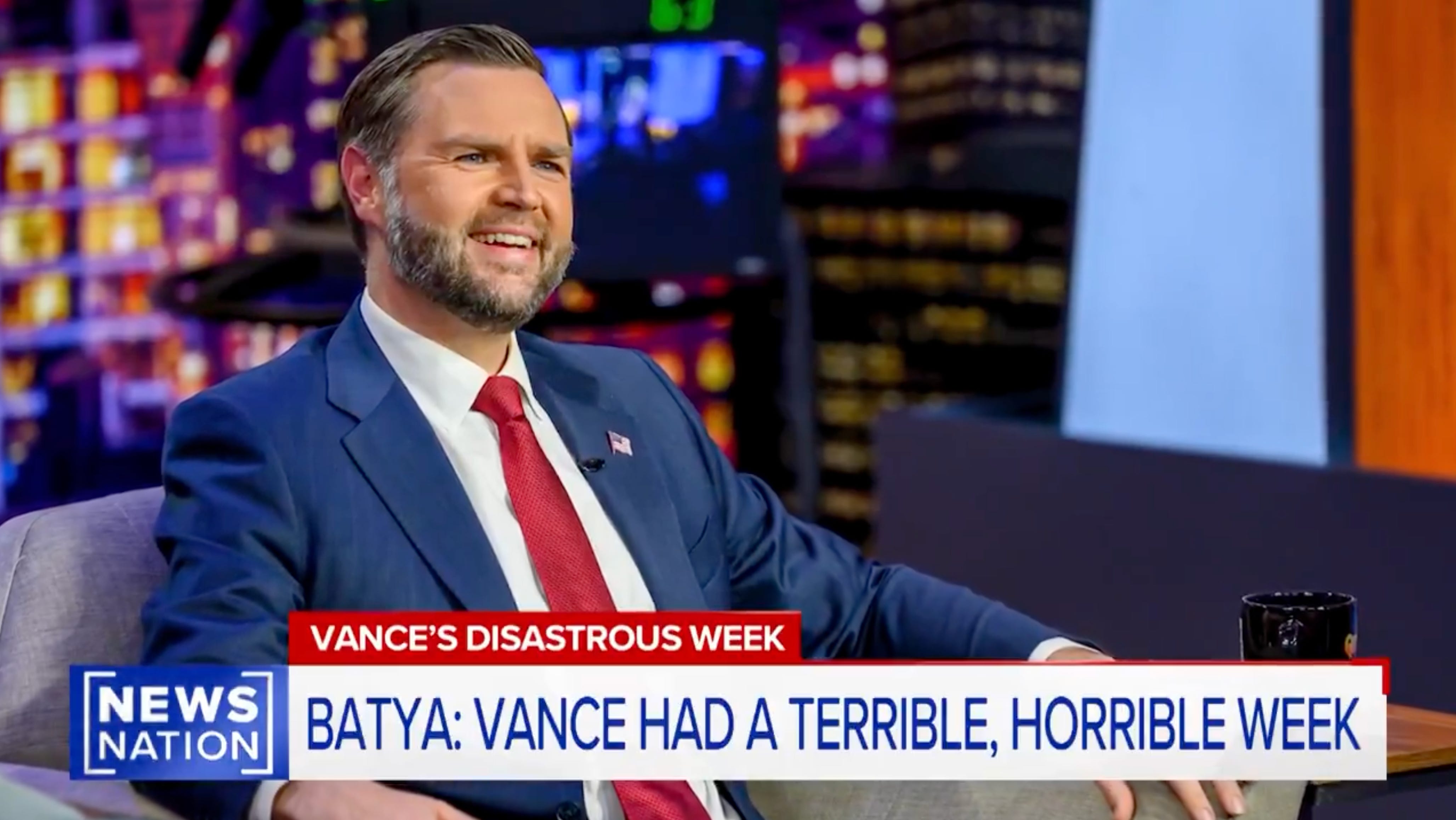
Over the weekend, I emerged momentarily from the world of local media to observe a social media campaign against Vice President Vance over the Iran peace deal. What was immediately clear, even as a fleeting observer, is that the social media kerfuffle is merely a proxy war over the 2028 primary, and it works because its central charge can never be tested.
Batya Ungar-Sargon, rising conservative media pundit, tweeted the following yesterday:
“Vice President JD Vance has had a terrible, horrible, no good very bad week. The only admin official defending the President’s MOU, the VP gaslit, sneered, prevaricated, and straight up lied to our faces. If this was a dry run for 2028, it was at least very clarifying.”
In fact, Batya seems to be going somewhat viral for this, becoming one of the “faces” of this dissent along with Mark Levin and some other longtime hawkish figures. Senator Bill Cassidy has called the agreement the worst foreign-policy blunder in decades and Lindsey Graham has taken to calling Vance "the architect" of it. A long line of commentators and twitter accounts have converged on the Vice President as chiefly responsible for “America’s embarrassment on the world stage.”
I doubt the criticism is insincere. Batya and others genuinely believe the deal is a capitulation, and reasonable people can find the terms unsatisfactory. But sincerity does not explain why the fire is trained primarily on the Vice President rather than the President who signed the document. That part is about who inherits the office Donald Trump leaves behind, and the deal has become the best available weapon.
The reason this criticism is so widespread and critics are so vocal is because it is the perfect non-falsifiable hit for the anti-Vance camp. They know their preferred outcome is unlikely without regime change or at least extended medium intensity conflict.
Batya is right that Iran was “weaker” than ever when they signed the deal. The question is whether you can get from that point to achieving your goals, and the record shows this is unlikely. The United States applied maximum military pressure for the better part of four months and arrived not at Iranian capitulation but at an American one, signed by a President who insisted throughout the war that we held all the leverage. This is simply the reality and to say any different would be asking for a level of continued conflict which has proven deeply unpopular and which presents exponentially greater costs over time. Therefore we’re probably committed to peace at least thru the midterms (or until Iran blows it up again,) so we will never have to test the critics’ preferred policy.
It’s worth pointing out that Vance warned, in his own words, that “weak little bombing runs” would not be enough, and he told the Washington Post two days before the first strike that there was no chance of a years-long war. Once Trump decided to go to war, Vance pushed to strike hard and fast, precisely so the United States would not get bogged down in the kind of inconclusive campaign that ends in a deal like this one. The faction now branding him the architect of a capitulation is, in large part, the faction that wanted the war and resisted a quick exit.
So, in summary, the people who were wrong are scapegoating the one who was right. And it’s transparently clear that he’s being scapegoated because this contingent of the conservative pundit class just doesn’t want him to be President.
It is a strange hill for conservatives to die on—peace is popular, even if embarrassing for us. Whatever its flaws, it is the President’s signature accomplishment of the summer, carrying the President’s signature, and the sight of conservative pundits attacking the Vice President for defending it is a gift to Democrats, who adore intra-conservative drama. The early returns suggest it may be backfiring—after sliding all year against a rising Marco Rubio, Vance’s standing in the prediction markets has ticked back up in recent days, during the very campaign meant to sink him.
The pressure campaign does clarify one thing, though probably not the thing it intends. It establishes beyond dispute that this is not Marco Rubio's deal. Rubio spent the spring climbing on the visibility of Iran diplomacy, and then, when the nearly inevitable conclusion of the war came due, was noticeably absent, his silence a noticeable contrast to Vance's tour defending the President.
The generous reading is that he kept his hands clean on a bad deal. The accurate one is that the Secretary of State appears to have sat out the President's largest foreign-policy effort because he did not want to own it. I really like Rubio and I think he’s been an excellent Secretary of State—which is why I think his unofficial and likely unsanctioned proxies are doing a tremendous disservice by highlighting this.